- Pleasure principle
- Geometry of love part 1
- Soul intrusion
- Electric flesh
- Skin paradox
- Velvet road
- Near Djaina
- Geometry of love part 2
After Metamorphoses in 2000, Jean-Michel Jarre released two works that departed from his previous musical style: Geometry of Love and Sessions 2000 (released in 2002, despite what the title might suggest).
The genesis of Geometry of Love dates back to a collaboration with Jean-Roch, owner of the exclusive “VIP Room” nightclub in Paris. Jarre was commissioned to create a soundtrack to complement the establishment’s sophisticated atmosphere. Initially, the album was conceived as a limited release, with only 2,000 copies intended for the club. However, due to its positive reception, it was released to the general public in September 2003.
Musically, the album maintains stylistic coherence with its predecessor, Sessions 2000, but is distinguished by a greater inclination towards modern electronica and chill-out music. The music on the album is much more minimalist than Jarre’s usual style, with clear lounge influences and touches of jazz. The Frenchman sets aside his recognizable and catchy melodies, focusing instead on intimate atmospheres and relaxing rhythms. Only the two parts of the title track dare to increase the BPM slightly. Not surprisingly, these are the only two tracks that have been performed live.
The rest of the album is imbued with melancholy, romanticism, sensuality, and mystery—adjectives difficult to apply to Jarre’s music before Metamorphoses, and which, unfortunately, have not been continued since.
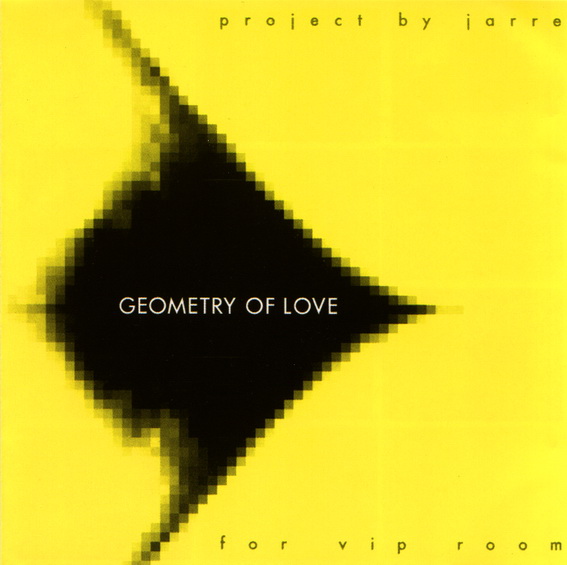
The album cover is notable for its artistic and personal approach. It features a pixelated image of the pubic area of Isabelle Adjani, the actress and Jarre’s partner at the time. This visual choice generated media attention and added a layer of intimacy and controversy to the project.
‘Pleasure Principle’ opens the album with an intriguing introduction, combining soft strings and percussive sounds that establish the album’s ambient tone. It is followed by ‘Geometry of Love Part 1’, a track characterized by its immersive electronic sounds.
‘Soul Intrusion’ stands out for its smooth, flowing arpeggios, accompanied by subtle percussion, offering a sense of calm and fluidity. ‘Electric Flesh’ introduces more pronounced rhythms and captivating melodies, maintaining the album’s tranquil essence but with greater dynamism. ‘Skin Paradox’ is an ambient piano composition that brings a sense of serenity and reflection, demonstrating Jarre’s ability to create emotive soundscapes.
‘Velvet Road’ is a reinterpretation of ‘Children of Space’, a previously unreleased piece that was part of the repertoire performed at Jarre and TK Komuro’s 2001 concert as The Vizitors. ‘Near Djaina’ (a rather unsubtle anagram of Adjani) is another piano piece that offers a soft, enveloping melody, reinforcing the album’s melancholic atmosphere.
The album closes with ‘Geometry of Love Part 2,’ a blend of smooth rhythms and electronic melodies, providing a satisfying and coherent conclusion to the album as a whole.
Critics gave the album mixed reviews. Some praised Jarre’s ability to adapt to contemporary trends in electronic music, while others noted the lack of distinctive elements that characterized the Frenchman’s earlier work.
Geometry of Love represents a stage of experimentation and adaptation for Jean-Michel Jarre. Although it differs from his best-known works, it offers an interesting exploration of ambient and lounge electronic music, showcasing his versatility and willingness to innovate in new sonic territories.