- 1519, Obertura
- Amor en Sevilla
- Carlos I Rey de España
- Terra Incognita
- Ave María
- Mare Incognitum
- Pavana del Navegante
- Canción del Marinero
- El mar infinito, la muerte
- Las Molucas
- Nao Victoria-Juan Sebastián Elcano
- 1522, la llegada
The four-year period 2019-2022 marks the fifth centenary of the departure, voyage and return of the expedition initiated by Ferdinand Magellan and completed by Juan Sebastián Elcano to the then-called ‘spice islands’ in East Asia, which resulted in the first circumnavigation of the Earth.
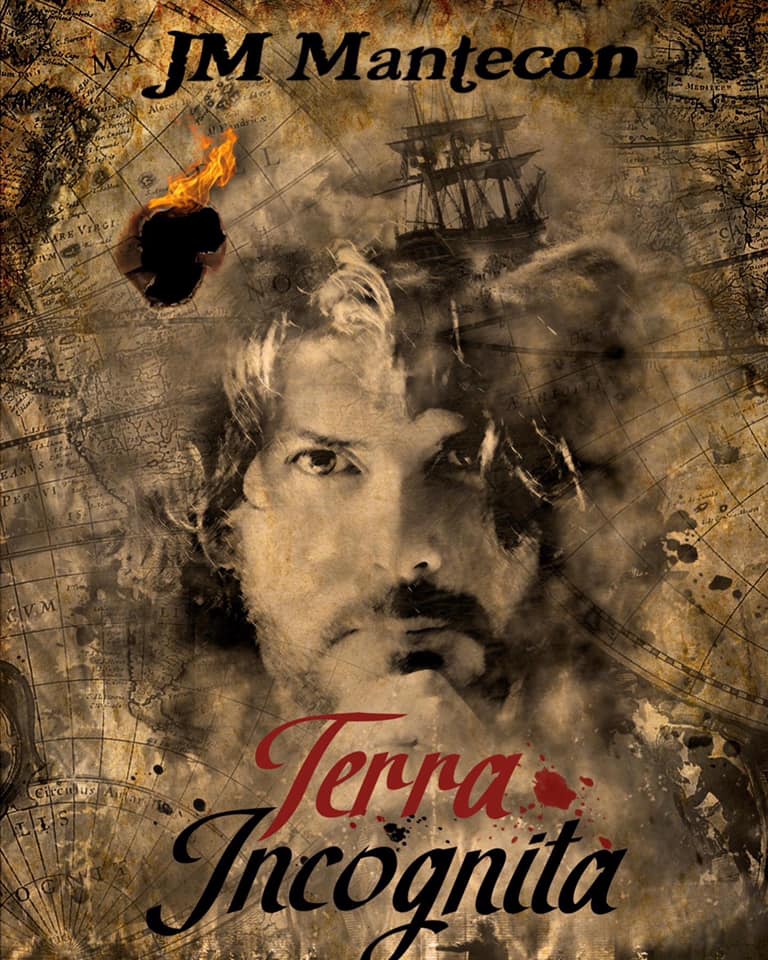
To mark this anniversary, numerous cultural activities have been organized, and public and private institutions have sponsored artistic creations in all fields. One of the most ambitious creations is undoubtedly this Magellan/Elcano Expedition Symphonic Concert, entitled ‘Terra Incognita’ by its composer, Juan Manuel Mantecón.
Premiered in Seville at the end of 2021 (somewhat delayed from the initially planned dates, due in part to the global Covid-19 pandemic), the work’s debut featured a true display of talent on the stage of the Nissan Cartuja Auditorium in the Andalusian capital: Mantecón himself, on piano and synthesizers, was accompanied by the Hispalense Chamber Orchestra and the University of Seville Choir under the baton of José Carlos Carmona; soprano Aurora Gómez; tenor Vicente Bujalance; Reyes Pérez on clarinet; Cristina Carrascal on violin; Rosa V. García on cello, and singer Ayrin and flamenco singer Julián Jaramillo as guest artists.
The hour-and-a-half-long concert attempts to capture Magellan’s epic voyage through music. All stories have different readings, interpretations, and points of view… But an adventure of this magnitude has infinite facets and nuances, surely impossible to encompass all when composing a piece that reflects them. It is therefore very interesting to analyze which moments, from all those experienced by the expedition, the composer has chosen and how he narrates them through music.

These are the pieces that make up the work:
- 1519, Obertura
- Amor en Sevilla
- Carlos I Rey de España
- Terra Incognita
- Ave María
- Mare Incognitum
- Pavana del Navegante
- Canción del Marinero
- El mar infinito, la muerte
- Las Molucas
- Nao Victoria-Juan Sebastián Elcano
- 1522, la llegada
1519, Overture immediately situates us in the historical context, paradoxically through an intelligent use of synthesizers and Jaramillo’s flamenco vocals, before unfolding, with the full orchestra and choir unleashed, a series of leitmotifs that represent Magellan’s dream in all its grandeur. Amor en Sevilla and Carlos I, Rey de España are movements that still precede the departure, suggesting that the preparation for the voyage and the personal circumstances of its captain have greatly influenced the concert’s planning. Thanks to this, we can enjoy the sublime Ave Maria, in which the spotlight shines on the beautiful voice of soprano Aurora Gómez.
The journey itself begins with the most experimental part of the concert: an improvisation for synthesizer, sequencer, and flamenco vocals in an intriguing combination that, if it has any flaw, is its brevity. The following piece, Mare Incognitum, revives orchestral and choral leitmotifs with great epic grandeur. During this piece, the Serendipia dance troupe also makes an appearance on stage, elevating the concert toward an operatic style and a total work of art in the Wagnerian sense of the term, further enhanced by the video projections created by the artists Atk Epop and Enrique Díaz.
It’s worth emphasizing that several themes and sonic resources are cleverly repeated throughout the work, in the purest style of a film soundtrack, giving the concert great internal coherence and a dynamism that, combined with the melodic and stylistic variety, makes it fly by. This variety is further enhanced by the multitude of sonic sources that can be traced throughout the work, nods to classical and contemporary composers that will delight film music enthusiasts. In a work about navigation, discoveries, and the 16th century, Vangelis’s 1492 cannot be overlooked, but there is much more to ‘Terra Incognita,’ an amalgam that, for those who can discern it, includes names as disparate as Manuel de Falla and Isaac Albéniz at the classical end of the spectrum, and Hans Zimmer and Howard Shore at the contemporary. All of these references are refined and made his own by Mantecón’s talent, giving the work a unique character.
It is also significant for the analysis to know which events were left out of the initial selection or were not reflected in the work as primary leitmotifs. As mentioned before, it is impossible to include everything. It seems that Mantecón legitimately chose the most luminous events, those that best allowed him to construct a fabulous, even mythological, narrative and translate it into music of great epic grandeur and lyricism, omitting others that perhaps demanded greater darkness, such as the authoritarian and despotic character of the hero, the betrayal of the San Antonio midway through the voyage, or the impositions that the Castilians inflicted on the natives, which ultimately led to the Portuguese captain’s death in Mactan. Although this last moment, Magellan’s death, is indeed incorporated into the concerto in the form of an elegiac adagio.
The work closes with the piece 1522, the arrival, a powerful exaltation of the global adventure in which all the actors participate in unison: orchestra, choir, violin, cello, clarinet, soprano, tenor and the guest artist Ayrin, putting the glorious finishing touch to a fabulous narrative, a grand epic, the story of a journey that changed the world, literally, and whose protagonists, 500 years later, deserved this musical recognition.
Following the concert’s premiere, plans remain to release a recording and a tour that could give a wider audience the opportunity to experience this magnum opus by Juan Manuel Mantecón and, perhaps, discover new facets of the story of sailors who set sail for the unknown one day in August 1519.